

When we hear about people forced to flee their homes because of war, violence or natural disasters, we often think of refugees, those who cross borders in search of safety. There’s another group, however, that doesn’t always get the same attention, internally displaced people or IDPs. Unlike refugees, these are individuals and families uprooted from their homes, yet still living within their own country and have not crossed the borders of their country. This brings its own set of challenges and needs different and unique solutions. They are some of the most vulnerable people in the world.
Internally displaced persons are people or groups who are forced to flee their homes due to armed conflict, violence, human rights violations or natural disasters but have not crossed an international border.
By mid-2024, more than 70 million people were forced to leave their homes because of conflict or violence but stayed within their own country. This number has doubled over the past decade and, if current trends continue, it could double again by 2030.
Many IDPs find themselves living in difficult and often unsafe conditions for years, sometimes even decades, without access to the support they need to rebuild their lives.

Conflict and violence are among the main causes of internal displacement. Wars, civil unrest and discrimination can force people to flee their homes to escape danger. In some cases, entire communities are uprooted as they seek safety from ongoing violence. Violations of human rights, such as forced evictions, persecution, and discrimination based on race, religion or political views, can drive people to flee their homes in search of safety.
As of January 2024, for example, more than 85% of Palestinians in Gaza (1. 9 million) were internally displaced because of violence.
Natural disasters like earthquakes, floods, hurricanes and droughts caused by climate change can force people to flee their homes. These events can damage houses, disrupt jobs, cause food shortages and make places unsafe to live, so people have move to safer areas.
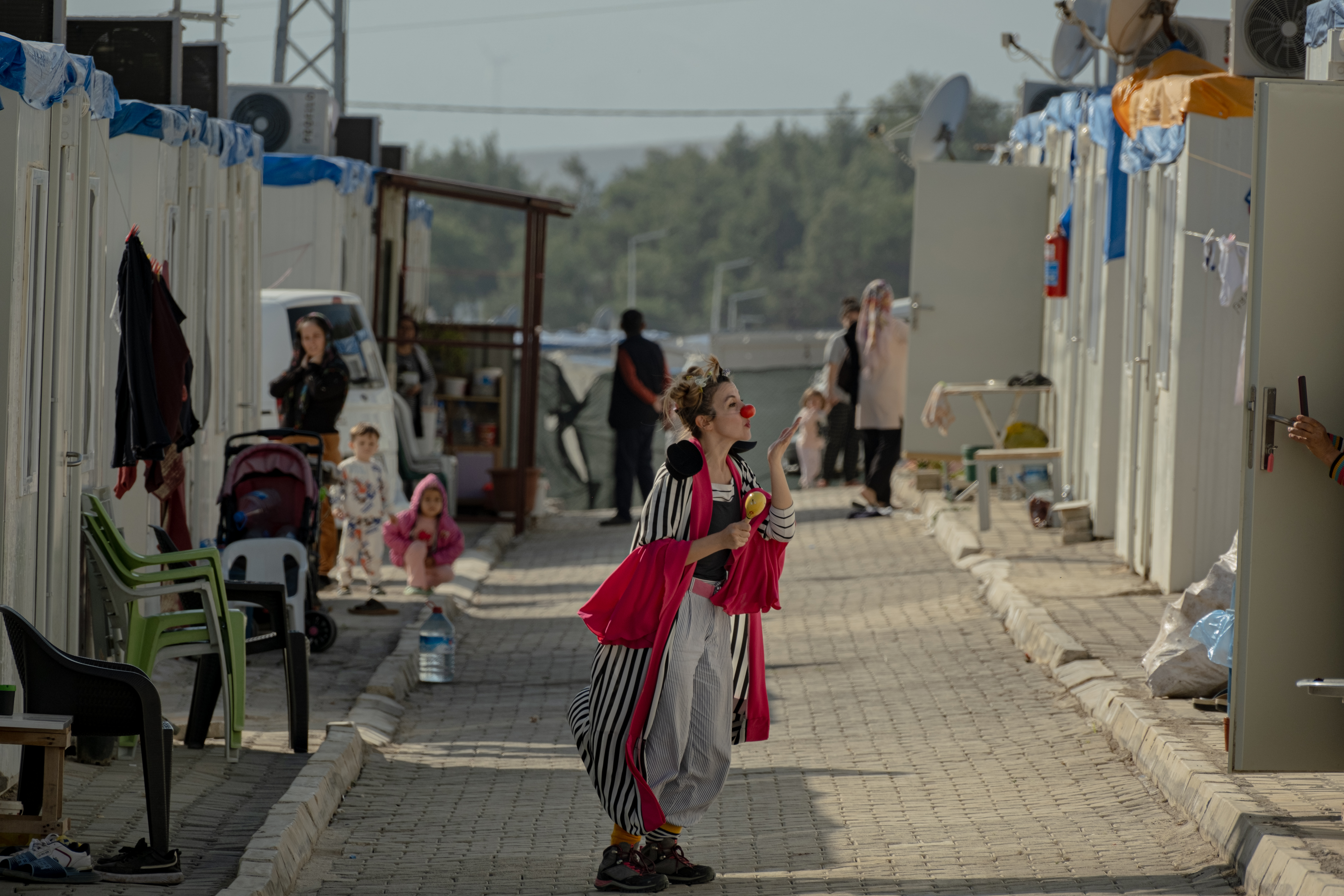
In February 2023, two powerful earthquakes with magnitudes of 7.8 and 7.5, along with their aftershocks, caused widespread devastation, loss of life, and displacement across Turkey and Syria. Nearly 4 million people in Turkey were left internally displaced, facing immense challenges in the aftermath. Clowns Without Borders UK responded by providing emotional first aid to those affected, offering much-needed moments of joy, comfort, and connection.
Sometimes, development projects like dam construction and mining can force people to leave their homes. They push people off the land, leaving them to rebuild their lives elsewhere if they can.
Three Gorges Dam in China, constructed between 1994 and 2006, displaced over 1.4 million people.
When people are forced to leave their homes quickly, their day-to-day lives are disrupted.
Internally displaced people often struggle to meet their basic needs for food, water, shelter and health care. Many live in overcrowded and conditions, which can lead to health issues and the spread of disease. Access to clean water and adequate nutrition is often limited, exacerbating their vulnerability.
Children among Internally Displaced Persons face significant barriers to education. Schools may be destroyed or too far away, and families may lack the resources to send their children to school. Education is critical for children’s development and future opportunities and its disruption can have long-term impacts.
It’s the responsibility of national governments to keep their displaced persons safe and help them. But sometimes, they are not able or choose not to. Without crossing international borders, Internally Displaced Persons (IDPs) may not receive the same legal protections as refugees. They often lack documentation, which can prevent them from accessing services or asserting their rights. Social stigma and discrimination can lead to further marginalisation. This makes it difficult to integrate into new communities.
The trauma of being forcibly displaced can have a profound psychological impact on Internally Displaced Persons. Loss of home, community and stability can lead to feelings of grief, anxiety, and depression. Providing mental health support is essential to help those who need it to cope and rebuild their lives.
International law, including standards set by the UN General Assembly, plays an important role in protecting internally displaced persons. Global reports on displacement trends help track the number of IDPs worldwide, while UN agencies work to provide essential humanitarian assistance. However, much more needs to be done to address the ongoing challenges faced by internally displaced persons.
Providing a safe place for IDPs, ensuring access to humanitarian assistance, and developing long-term solutions for local integration or eventual return to their places of habitual residence are critical steps in supporting this vulnerable group. As countries around the world continue to face the effects of armed conflict and violence, the global community must come together to ensure that the most vulnerable, including IDPs, are not forgotten.
The Guiding Principles on Internal Displacement (1998) are the main international guidelines for protecting internally displaced people (IDPs). Although they aren’t legally binding, they offer a complete framework for:
Preventing displacement
Protecting IDPs while they are displaced
Helping them find long-term, stable solutions
In Africa, the Kampala Convention (adopted by the African Union in 2009) is a legally binding agreement specifically focused on protecting and assisting IDPs. It’s a significant step forward in providing stronger legal protections for displaced people across the continent.
Here’s a simple table highlighting the most important international guidelines for IDPs:
Instrument | Year | Type | Focus |
|---|---|---|---|
1998 | Non-binding | Preventing displacement, protecting IDPs, and finding solutions | |
2009 | Legally binding (Africa only) | Protecting and assisting IDPs within Africa |
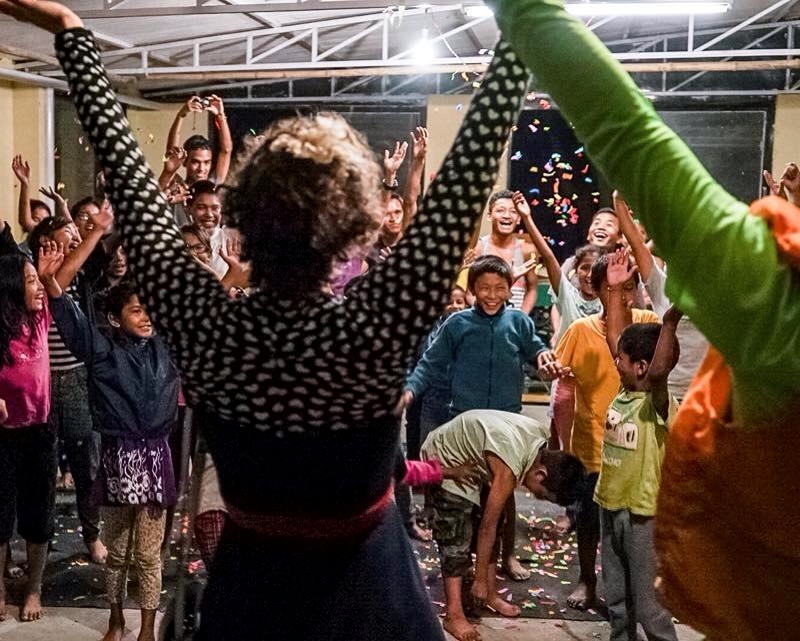 Clowns Without Borders UK meets internally displaced people where they are, often in the heart of a crisis, where joy can feel limited. Our work goes beyond entertainment: it’s a vital tool for psychosocial support, especially for children navigating trauma, uncertainty and loss. Through performances, play, and creative workshops, we offer moments of laughter, connection, and emotional relief. Our work goes beyond entertainment: it’s a vital tool for psychosocial support.
After devastating earthquakes in 2023, Turkey had 1.1 million IDPs, according to the Internal Displacement Monitoring Centre (IDMC). Clowns Without Borders UK shared emotional relief through laughter with internally displaced people. In 2023, we reached over 10,000 children across the affected regions, delivering 128 performances that offered moments of joy and connection amidst the destruction.
The ongoing conflict has left 3.7 million people internally displaced, and Clowns Without Borders UK has been working to ease the emotional toll on children and families since 2023. Through our performances and workshops, we offer a much-needed escape in a safe and supportive environment. As these families move to new areas, far from their homes, our activities provide not just laughter but also a sense of normalcy amidst the challenges of day-to-day life. Collaborating with local communities and organisations, we help build resilience and connection through play and creative expression.
The UN Refugee Agency (UNHCR) calls it an “invisible crisis,” and more than 700,000 people in northern Mozambique have been forced to leave their homes. Most had to flee because of fighting in the Cabo Delgado region, while others were displaced by natural disasters in central Mozambique. Since 2018, Clowns Without Borders UK’s teams of professional clowns and artists work alongside local communities to provide essential emotional support. Through our performances and workshops, we create safe spaces for children and families to reconnect, play together and experience moments of joy amidst hardship.
Internal displacement happens when people have to leave their homes within their own country. This can be due to reasons like conflict, natural disasters or human rights violations. Asylum seeking is different. It involves going to another country for protection from danger or persecution.
Local governments are key in helping people who are displaced within their own country. They take immediate action by providing support services. They also work to organize humanitarian aid. Additionally, they make sure that the human rights of displaced people are protected in their areas.
NGOs and in partnership with the United Nations, play a crucial role in supporting internally displaced persons by providing essential aid and advocating for their rights. In places like the Democratic Republic of the Congo, conflict has increased the number of people displaced to an all-time high of 7.3 million. International organisations work with host communities to help IDPs receive shelter, food, and healthcare. In short, whilst the primary responsibility for assisting IDPs lies with governments, NGO’s can work together to uphold international standards.
A refugee is someone who has fled their home country due to persecution, war, or violence and seeks refuge in another country. While both IDPs and refugees have been forced to leave their homes, the key distinction lies in whether they have crossed an international border.